
Indiana Motorcycle Accident Lawyer
A motorcycle crash leaves a rider with serious injuries and an insurer that often assumes the rider was to blame. Emerson Divorce and Accident Injury Attorneys, L.L.C. represents injured riders, passengers, and families across Indiana from offices in Carmel, Fishers, and Zionsville, and builds each case on the evidence of what actually happened. You pay no fee unless we recover for you.


Essential Guide to Indiana Motorcycle Accident Claims
Legally reviewed by JR Emerson, October 25, 2026
In Indiana, a motorcycle accident injury claim must generally be filed within two years after the claim accrues, which for a crash is almost always the day of the collision (IC 34-11-2-4). Under Indiana's comparative fault law (IC 34-51-2), a rider's recovery is reduced by the rider's own share of fault and barred only if that share is greater than 50 percent; the rule does not govern claims against a government driver or agency, and a claim over a city, county, or State vehicle or road needs written notice within 180 or 270 days. Adult riders are not legally required to wear a helmet in Indiana (IC 9-19-7-1), but insurers often raise helmet non-use anyway, and whether it matters depends on the medical evidence of what caused each injury.
JR Emerson and Jill Bracken-Emerson are long-time Noblesville residents who represent injured riders statewide from the primary office in the Carmel Arts and Design District, with offices in Fishers and Zionsville. Indiana law gives a motorcycle the full use of a traffic lane, and a driver may not crowd a rider out of it (IC 9-21-10-6); many crashes start with a driver who did exactly that, or who turned left across a rider's path.
The firm brings 45 years of combined experience to these cases. Motorcycle accident cases are handled on a contingency fee, and when you call (317) 969-8000, Katie or Penny will usually answer. They know every active case in the office, and JR or Jill often answer the phone themselves.
Get your free motorcycle accident case review → | (317) 969-8000
Five Things to Know About Our Motorcycle Accident Practice
- Two attorneys on every serious case. Jill Bracken-Emerson leads the firm's personal injury practice and is involved in every motorcycle accident case, with JR Emerson.
- We answer the "rider fault" assumption with evidence. Scene photographs, video, the other vehicle's data, and reconstruction, not argument.
- We handle the helmet question carefully. We separate the injuries a helmet could not have affected from those it might have, with medical proof.
- We look past the first insurance policy. The other driver's limits are often far below a rider's losses, so we look for every policy, including your own underinsured motorist coverage.
- You pay nothing up front. Motorcycle accident cases are handled on a contingency fee, and the case review is free.
Indiana Motorcycle Accident Attorneys for Injured Riders and Passengers

A motorcycle accident claim asks the driver or company whose negligence caused a crash to pay for what it cost the rider: medical care, lost income, the motorcycle and gear, and the pain and permanent limits that follow when there is nothing between a rider and the road. At Emerson Divorce and Accident Injury Attorneys, L.L.C., motorcycle cases are part of the firm's Indiana personal injury practice, and they range from left-turn crashes at suburban intersections to interstate collisions with trucks.
Motorcycle claims are harder than they should be for one reason above the rest: the assumption, often unspoken, that a rider must have been speeding or showing off. Indiana law treats a motorcycle like any other vehicle, with the same rights and duties on the road (IC 9-21-10-7), and the evidence in most crashes points to a driver who did not see, or did not yield to, a motorcycle that was there to be seen. Our job is to put that evidence in front of the insurer, and if necessary a jury, before the assumption takes hold.
JR Emerson and Jill Bracken-Emerson are long-time Noblesville residents and a husband-and-wife team. Jill leads the firm's personal injury practice and has tried seven medical malpractice cases to verdict in Indiana; an attorney since 1995 with more than 30 years of legal experience, she has focused on personal injury since 2007. She was selected to Super Lawyers (2025 through 2027) as a top rated personal injury attorney in Carmel, Indiana. JR Emerson, an attorney since 2012, is a former judge of the Whitestown Town Court, which heard traffic and municipal matters; from the bench, he evaluated the credibility of witnesses and physical evidence in contested traffic matters. Between them they have more than 25 combined years practicing in Indiana courts.
We represent riders, passengers, and the families of riders killed in crashes across Hamilton, Boone, and Marion Counties and throughout Indiana. If you were hurt, call (317) 969-8000 or request a free case review. We will listen, tell you whether we see a claim, and explain your next steps with no cost and no obligation.
Meet Emerson Divorce and Accident Injury Attorneys, L.L.C.
Meet our attorneys and learn how our firm helps people.
No pressure, no obligation, just two attorneys who care about doing this the right way.
Where Is an Indiana Motorcycle Accident Case Filed?
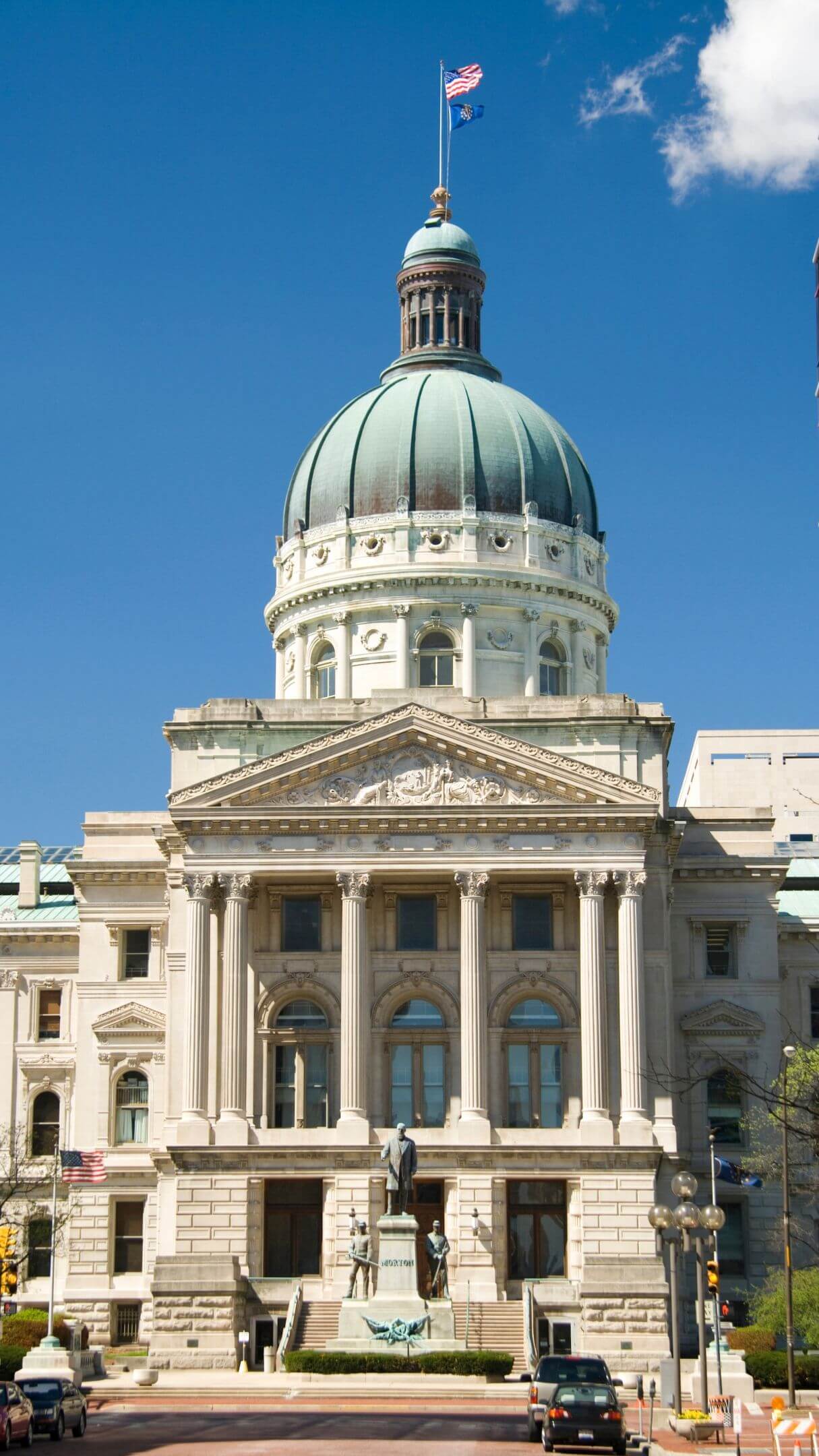
An Indiana motorcycle accident lawsuit is usually filed in the county where the collision happened. Indiana Trial Rule 75(A)(3) makes the county where a motor vehicle collision occurred a preferred venue for claims about the operation of the vehicle; the county where most individual defendants live (75(A)(1)) and the county of a defendant company's principal office (75(A)(4)) are others, and a claim against a government organization may be filed where the plaintiff lives or where the government's office is located (75(A)(5)).
In practice, a crash on 116th Street in Fishers or at a Carmel roundabout is filed in Hamilton County at the Government and Judicial Center in Noblesville; a crash on Michigan Road in Zionsville goes to the Boone County Courthouse in Lebanon; and an Indianapolis crash goes to Marion Superior Court at the Community Justice Center on Justice Way. Elsewhere in the state, the case goes to the circuit or superior court of the county where the crash happened.
Most motorcycle accident claims never reach a jury. They resolve through negotiation with the insurers, often after a lawsuit has been filed and the evidence has been exchanged. Filing in the right county still matters from the start, because the court sets the schedule, rules on what evidence the jury will hear, including any helmet evidence, and usually orders mediation before trial.
Why Do Injured Riders Choose Our Firm?
Riders choose us because a motorcycle case turns on proving how the crash happened and on medical proof of serious injury, and because a two-attorney firm stays involved from the first call to the final check. Four specifics:
Two Attorneys on Your Case
Jill Bracken-Emerson leads the firm's personal injury practice and is involved in every motorcycle accident case, with JR Emerson. Two experienced attorneys review every file before anything is filed.
25+ Combined Years in Indiana Courts
JR and Jill have more than 25 combined years practicing in Indiana courts, where motorcycle accident cases are filed, mediated, and tried.
Physicians and Retained Professionals
We work with treating physicians and, when a case needs them, retained professionals such as accident reconstructionists, life care planners, and economists, so the proof of fault and the proof of loss are both complete.
Prepared for Trial From Day One
We believe the best result in a serious injury case comes from preparing it as if a jury will decide it, so that is how we build every case from the first day.
Why Are Indiana Motorcycle Accident Cases Different?
Indiana motorcycle cases differ from car cases because the injuries are more severe, the helmet and lane-position questions come up in nearly every claim, and insurers start from an assumption that the rider shares the blame. Several Indiana statutes address motorcycles by name, and knowing them is the starting point for answering those arguments.
Left Turns Across a Rider's Path
One of the most common serious motorcycle crashes is a driver turning left in front of an oncoming rider. Indiana requires a driver turning left to yield to oncoming vehicles in the intersection or close enough to be an immediate hazard (IC 9-21-8-30), and a motorcycle is an oncoming vehicle like any other. The usual defense is that the rider was going too fast to be seen; the answer is the physical evidence, the sight lines at the intersection, and, where it exists, video from nearby businesses or the other vehicle's own data.
Lane Position and Lane Splitting
A motorcycle is entitled to the full use of a traffic lane, and no vehicle may be driven in a way that deprives another vehicle of the full use of its lane (IC 9-21-10-6). Two motorcycles may ride side by side in one lane only if both riders agree. That rule cuts both ways. A driver who drifts into a rider's lane or squeezes past within it violates the statute, and a rider who passes between lanes of traffic invites the argument that the rider deprived other vehicles of their lanes. Indiana has no statute that authorizes lane splitting, so a rider who was splitting lanes should expect it to be raised as comparative fault.
Roundabouts and Signals That Do Not Change
Hamilton County's roundabouts, especially the multi-lane ones in Carmel, produce crashes where a driver entering the circle fails to yield to a motorcycle already in it. Indiana's roundabout statute addresses staying to the right of the central island and yielding to oversized vehicles (IC 9-21-8-10, IC 9-21-8-10.5); an ordinary entry-yield dispute between a car and a motorcycle is decided under the posted yield signs and general right-of-way rules, which makes video and the point of impact on each vehicle the key evidence. Our Carmel roundabout accident page covers those crashes in detail.
Traffic signals raise a motorcycle-specific issue too. Many signal sensors do not detect a motorcycle. Indiana lets a rider proceed through a steady red light only after a complete stop of at least 120 seconds, treating the signal as a stop sign and going only when it is safe (IC 9-21-3-7(b)(3)(D)). A rider who followed that rule was not running the light, and the timing can usually be proved from video or witnesses.
The Helmet Question
Indiana requires a helmet only for riders and passengers under 18 (IC 9-19-7-1) and for anyone riding on a motorcycle learner's permit, regardless of age (IC 9-24-8-3(b)(1)). Adult licensed riders may legally ride without one. Insurers and defense counsel often raise helmet non-use anyway, usually to argue that it made a head injury worse. Whether that argument has any effect depends on the medical evidence of what actually caused the injury, and it has no logical bearing on injuries to other parts of the body, such as a broken leg or a crushed pelvis. We build the medical proof injury by injury so that question is answered before it is asked.
Indiana's 2024 change allowing seat belt evidence on damages (IC 9-19-10-7) applies to seat belts, not helmets. In our experience, the helmet argument is weakest when the medical records separate the injuries clearly, which is why we ask treating physicians to address it early.
Defective Motorcycles, Helmets, and Gear
The Indiana Supreme Court's crashworthiness decision is a motorcycle case. In Miller v. Todd, 551 N.E.2d 1139 (Ind. 1990), a passenger was injured after a motorcycle skidded on gravel, and the Indiana Supreme Court recognized that a manufacturer can be liable for injuries a design defect added on top of those the crash itself would have caused. A later decision holds that the injured person's own fault in causing the crash is still apportioned in those claims (Green v. Ford Motor Co., 942 N.E.2d 791 (Ind. 2011)). A failed helmet, a brake defect, or a tire failure can therefore bring a manufacturer into the case alongside the driver who caused the collision.
Government Roads and Vehicles
Potholes, loose gravel from road work, and uneven pavement are more dangerous on two wheels than on four. When a road defect or a government vehicle causes a crash, the claim runs under the Indiana Tort Claims Act: notice must reach a political subdivision within 180 days (IC 34-13-3-8) and the State, including INDOT, within 270 days (IC 34-13-3-6), damages are capped at $700,000 per person (IC 34-13-3-4), and the comparative fault statute does not apply (IC 34-51-2-2). Government defendants are also immune for temporary road conditions caused by weather (IC 34-13-3-3(a)(3)), though not for a known, recurring defect the government failed to fix (Ladra v. State, No. 21S-CT-235, Dec. 9, 2021).
What Types of Motorcycle Accident Cases Do We Handle?
We handle motorcycle crashes of every kind where another driver's or company's negligence caused an injury or a death.
Left-Turn Crashes
A driver turns across the rider's path at an intersection or driveway, the pattern behind many of the most serious motorcycle injuries.
Lane-Change and Sideswipe Crashes
A driver moves into the rider's lane without checking, often on the interstates or multi-lane corridors like US-31 and 116th Street.
Rear-End Crashes
A distracted or following-too-close driver strikes a rider stopped at a light or slowing in traffic, throwing the rider from the motorcycle.
Impaired and Distracted Drivers
Drivers on a phone or under the influence who never see the motorcycle. Our drunk driving crash page covers the added claims.
Road Hazard Crashes
Potholes, gravel, and debris, including loads that fall from trucks; claims may run against a government entity or a trucking company.
Hit-and-Run Crashes
A driver who leaves the scene; recovery often comes through your own uninsured motorist coverage. See our hit-and-run page.
Crashes involving a semi or a delivery truck add the federal trucking rules and more than one insurer; see our truck accident page.
How Does an Indiana Motorcycle Accident Case Work, Step by Step?
An Indiana motorcycle accident case moves from investigation and medical documentation to a demand and negotiation, and to a lawsuit only if the insurers will not offer fair compensation. Because the rider's fault is usually disputed, the investigation step carries more weight than in most car cases.
- 1Free Case Review. We listen, review the facts and the documents you have, and explain the options. No cost, no obligation, including when we tell you there is no claim.
- 2Investigation and Evidence. The crash report, scene photographs, witness statements, business and traffic video, the other vehicle's data, and an inspection of the motorcycle and gear. If a government vehicle or road is involved, the Tort Claims Act notice goes out within the deadline.
- 3Medical Treatment Coordination. Connecting you with qualified physicians and making sure treatment is documented for the claim.
- 4Demand Package. Once you reach maximum medical improvement, a package documenting liability, damages, and losses.
- 5Insurance Negotiations. Presented on the full record rather than a summary, with the liability carrier and, where the limits are too low, your own underinsured motorist carrier.
- 6Filing Suit If Necessary. If the insurer will not offer fair compensation, we file in the county where the crash happened or another proper venue.
- 7Discovery, Depositions, Trial Preparation. Building a trial-ready case, with retained professionals where the case needs them.
- 8Resolution. Most claims resolve by settlement. Liens are resolved before disbursement so the figure you are told is the figure you receive.
What Compensation Can You Recover After an Indiana Motorcycle Accident?
An injured Indiana rider can recover economic damages such as medical bills, lost wages, and the cost of the motorcycle and gear, and non-economic damages for pain, scarring, limitation, and loss of enjoyment of life. Ordinary negligence claims against private drivers carry no general damages cap in Indiana; the caps that exist apply to government defendants, punitive damages, qualified health care providers, and certain wrongful death claims.
Economic Damages
- Medical care, past and future: emergency care, surgery, skin grafts, hospitalization, rehabilitation, therapy, medication, and the care a physician says you will need later.
- Lost wages and lost earning capacity: the income already lost and any reduced ability to work in the future.
- Property damage: repair or replacement of the motorcycle, the helmet, riding gear, and personal property.
- Out-of-pocket costs: travel to appointments, equipment, and help at home during recovery.
Non-Economic Damages
Non-economic damages compensate for physical pain, emotional distress, scarring, permanent limitation, and the loss of activities that made up your life before the crash, which for many riders includes riding itself. A spouse may also have a claim for loss of consortium. Road rash and surgical scarring are often visible for life, and the claim should account for that.
Punitive Damages
Punitive damages may be awarded for egregious conduct, such as a drunk driver who strikes a rider, but only on clear and convincing evidence (IC 34-51-3-2). They are capped at the greater of three times compensatory damages or $50,000 (IC 34-51-3-4), the plaintiff receives 25 percent and 75 percent goes to the state's violent crime victims compensation fund (IC 34-51-3-6), and they are not available against a government entity (IC 34-13-3-4(b)).
Health Insurance, Collateral Sources, and Liens
Indiana's collateral source statute lets the defense show the jury most payments made by others toward your losses, but not life insurance, insurance you or your family paid for directly, or government benefits (IC 34-44-1-2). A hospital that treated you may hold a lien on the recovery, but it must first be reduced by your health insurance, it does not attach to MedPay or to Medicare patients, and if paying the liens in full would leave you less than 20 percent of the full settlement, they are reduced so that you keep 20 percent (IC 32-33-4-3).
When a crash causes a death, the family's claim runs under Indiana's wrongful death statutes rather than as an ordinary injury claim; our wrongful death page explains how those claims work.
Hurt in a Motorcycle Crash in Indiana?
Free case review. No fee unless we win. We will tell you honestly where you stand.
What Injuries Do We See in Indiana Motorcycle Accident Cases?
Motorcycle crashes cause brain injuries, spinal injuries, multiple fractures, road rash and degloving injuries, and, in the worst cases, amputations, because the rider absorbs the full force of the impact and the pavement. Across central Indiana, the most seriously injured are taken to the Level I trauma centers in Indianapolis designated by the Indiana Department of Health, including IU Health Methodist Hospital, Eskenazi Health, and Ascension St. Vincent Indianapolis Hospital.
Traumatic Brain Injuries
A helmeted rider can still suffer a concussion or a more serious brain injury from the rotational forces of a crash. Memory problems, headaches, mood changes, and trouble concentrating that last weeks or months belong in the medical record from the first visit. Our brain injury page covers these claims in detail.
Spinal Cord Injuries
A rider thrown from a motorcycle can fracture vertebrae and injure the spinal cord, causing partial or complete paralysis. These cases depend on a life care plan and an economist's projection of future costs, prepared by retained professionals. More on spinal cord injury claims.
Fractures
Leg, ankle, wrist, collarbone, rib, and pelvic fractures are among the most common motorcycle injuries, and many need surgery with plates, rods, or screws followed by months of therapy. See our broken bone injury page.
Road Rash and Scarring
Sliding across pavement can strip away skin and tissue down to muscle or bone. Severe road rash and degloving injuries can require skin grafts and leave permanent scarring that belongs in the damages claim. More on scarring and disfigurement.
Amputations
Crushing injuries, especially in crashes with trucks or fixed objects, can cost a rider a limb, with years of surgery, prosthetics, and therapy to follow. See our amputation injury page.
What Indiana Laws Apply to a Motorcycle Accident Claim?
An Indiana motorcycle accident claim is governed by the two-year statute of limitations in IC 34-11-2-4, the modified comparative fault rule in IC 34-51-2, the traffic statutes that give motorcycles the same rights and duties as other vehicles, the helmet statutes, and the insurance statutes in IC 9-25-4 and IC 27-7-5. When a government vehicle or road is involved, the Indiana Tort Claims Act (IC 34-13-3) adds its own notice and damages rules.
How Comparative Fault Changes a Recovery
Your recovery is reduced by your own percentage of fault, and it is barred only if your fault is greater than the fault of everyone else combined, which means greater than 50 percent (IC 34-51-2-5, IC 34-51-2-6). The table uses a $100,000 total-damages figure as an example.
| Your share of fault | What happens to $100,000 in damages |
|---|---|
| 0 percent | $100,000 |
| 20 percent | $80,000 |
| 50 percent | $50,000 (exactly half still recovers) |
| More than 50 percent | Nothing; the claim is barred |
| Claim against a government driver or agency | The comparative fault statute does not apply (IC 34-51-2-2); under the contributory negligence rule that governs instead, any fault can bar the claim |
| Adult rider not wearing a helmet | Not required by law for licensed adult riders (IC 9-19-7-1); insurers may still argue it made a head injury worse, which turns on the medical evidence and has no bearing on injuries to other parts of the body |
Deadlines for Indiana Motorcycle Accident Claims
Most motorcycle accident injury claims have a two-year deadline, but government, wrongful death, and product claims run on their own clocks, and some are much shorter.
| Claim | Deadline | Indiana Code |
|---|---|---|
| Injury claim against another driver | 2 years after the claim accrues, usually the day of the crash | IC 34-11-2-4 |
| City, county, town, school corporation, or other political subdivision | Written notice within 180 days after the loss | IC 34-13-3-8 |
| The State, including INDOT | Written notice within 270 days after the loss | IC 34-13-3-6 |
| Wrongful death from a crash | 2 years from the date of death, filed by the personal representative | IC 34-23-1-1 |
| Injured child | The child's own claim may be brought within 2 years after turning 18 | IC 34-11-6-1 |
| Defective motorcycle, helmet, or part | 2 years from accrual and generally within 10 years of delivery to the first user | IC 34-20-3-1 |
Most Indiana crash claims must be filed within two years, but a claim against a city, county, or state vehicle or road needs written notice much sooner; see how long you have to file a crash claim in Indiana.
IC 9-19-7-1 and IC 9-24-8-3: Helmets
A rider or passenger under 18 must wear a helmet meeting the federal standard and protective glasses, goggles, or a face shield. A rider on a motorcycle learner's permit must wear a helmet regardless of age, ride only between a half hour before sunrise and a half hour after sunset, and carry no passengers. Licensed adult riders are not required to wear a helmet.
IC 9-21-10-6 and IC 9-21-10-7: Motorcycles in Traffic
All traffic rules, and the rights and duties that come with them, apply to motorcycle operators except those that by their nature cannot. A motorcycle is entitled to the full use of a lane, and no vehicle may be driven so as to deprive another of the full use of its lane. Two motorcycles may ride abreast in one lane only with both riders' consent.
IC 9-21-8-30: Left Turns
A driver turning left must yield to oncoming vehicles in the intersection or close enough to be an immediate hazard. It is the statutory starting point in a left-turn crash with a motorcycle.
IC 9-25-4-5 and IC 27-7-5: Insurance
Indiana drivers must carry at least $25,000 for injury or death of one person, $50,000 for two or more people, and $25,000 for property damage. Insurers must provide uninsured and underinsured motorist coverage at the policy's liability limits unless the insured rejects it in writing (IC 27-7-5-2). A vehicle is underinsured when the at-fault limits are less than your underinsured limits (IC 27-7-5-4(b)), and before settling with the at-fault driver, notice of the offer goes to your underinsured carrier, which has 30 days to advance the amount if it wants to keep its right to pursue that driver (IC 27-7-5-6(b)).
Traffic Violations as Evidence
Under Indiana law, an unexcused violation of a safety statute is negligence per se, which creates a rebuttable presumption of negligence; the driver may try to excuse it by showing he acted as a reasonably careful person trying to obey the law would have (Davison v. Williams, 242 N.E.2d 101 (Ind. 1968)). The rider must still show the statute was meant to protect people in the rider's position and that the violation caused the crash.
Wrongful Death and Survival Actions Are Different Claims
When a person dies from injuries another party caused, the family's claim proceeds under one of Indiana's three wrongful death statutes: IC 34-23-1-1, IC 34-23-1-2, or IC 34-23-2-1, depending on whether the person who died was an adult with dependents, an adult without dependents, or a child. Those statutes compensate the survivors for their own losses. The deceased person's own pre-death pain and suffering is not recoverable in a wrongful death case.
A survival action under IC 34-9-3-4 applies only when an injured person later dies from a cause unrelated to the injury. In that situation the personal representative may pursue the damages the injured person could have recovered while alive, and those damages belong to the estate. We review the facts of every fatal injury case to determine which statute controls, because the choice affects who can recover, what can be recovered, and whether a damages cap applies.
Insurer Blaming the Rider?
We gather the evidence of what actually happened and answer the helmet and lane questions with facts, at no cost to you.
What Should You Do After a Motorcycle Accident in Indiana?
After a motorcycle crash, get medical help first, then preserve the evidence of where the motorcycle and the other vehicle were, because the rider's position is what the insurer will dispute.
At the Scene
- Call 911 and let responders check you. Leave your helmet on if you have neck or back pain until medical help arrives. Indiana requires every driver involved to stop and help anyone hurt (IC 9-26-1-1.1).
- Photograph the scene before vehicles move. Where the motorcycle and the other vehicle came to rest, gouge marks and debris, the intersection or lane markings, and the damage to both vehicles.
- Get the report number and the other driver's information. Name, insurance, plate, and the investigating agency.
- Find witnesses and cameras. Other riders, drivers, and nearby business or doorbell cameras. Video is often overwritten within days.
- Do not discuss fault or speed. Stick to the facts with the police and the other driver.
In the Following Weeks
- Keep the motorcycle, helmet, and gear. Do not repair or discard them until they have been inspected; their damage shows how the crash happened and how the injuries occurred.
- Follow through on treatment. Report every symptom, including headaches and memory problems, and keep every appointment.
- Do not give a recorded statement to the other driver's insurer, and do not sign a release.
- Tell your own insurer promptly. Your motorcycle policy's medical payments and uninsured or underinsured coverage may matter.
- Watch the government deadline. A road defect or government vehicle starts a 180-day or 270-day notice clock.
In our experience, the rider's helmet and jacket are among the most useful pieces of evidence in the case. The scuffs and impact marks show which way the rider was thrown and what struck what, and they often answer the insurer's speed argument better than any witness.
Indiana Court Guide for Motorcycle Accident Cases
Most central Indiana motorcycle accident cases are filed in Hamilton, Boone, or Marion County, depending on where the crash happened, and cases from elsewhere in the state are filed in the county of the crash.
Hamilton County (Carmel, Fishers, Westfield, Noblesville): Hamilton County Government and Judicial Center, 1 Hamilton County Square, Noblesville, IN 46060. Clerk (317) 776-9629. One Circuit Court and seven Superior Courts. From our Carmel office: northeast via US-31 North to SR-32 East.
Boone County (Zionsville, Lebanon, Whitestown): Boone County Courthouse, 212 Courthouse Square, Lebanon, IN 46052. Clerk (765) 482-3510. Civil cases may be filed in the Circuit Court or Superior Court I or II. From our Zionsville office: SR-334 west to I-65 north.
Marion County (Indianapolis): Marion Superior Court, Civil Division, Community Justice Center, 675 Justice Way, Indianapolis, IN 46203. Clerk (317) 327-4740.
Government claims: Before any suit, a written Tort Claims Act notice goes to the political subdivision within 180 days or to the State within 270 days, and suit waits until the claim is denied (IC 34-13-3-13).
How Long Does an Indiana Motorcycle Accident Case Take?
An Indiana motorcycle accident case usually takes from several months to two years or more, because the claim should not be valued until treatment ends and the long-term effects are known, and because disputed fault, several insurers, or a government defendant adds time.
Fastest
Clear liability, injuries that heal, and enough insurance. Some claims resolve within months after treatment ends.
Moderate
Surgery or longer treatment, disputed fault, or an underinsured motorist claim. Often a year or more.
Complex
Permanent injury, a reconstruction, a product claim, or a government claim that must be denied before suit.
Trial
Cases that go through full discovery, depositions, mediation, and a jury trial commonly take two years or longer.
Proven Results for Indiana Accident Victims
Real recoveries. Real families. Real impact.
Settlement for the children of a mother who died after a hospital failed to monitor vitals and respond to documented warning signs.
Settlement for a husband after a commercial truck ran a stop light and killed his wife. The claim included the trucking company's negligent hiring and training.
Settlement for a woman with a disability who was severely injured when the driver of the transport van carrying her wrecked it.
Settlement for a driver who struck a truck negligently stopped in traffic on I-69, suffering several broken bones that required multiple surgeries.
Settlement after an unlicensed driver in a large truck turned into our client's car, causing multiple leg fractures that required multiple surgeries.
Settlement for a Carmel bicycle rider who suffered a brain injury when struck by a driver; the claim was that the driver failed to yield.
Past results do not guarantee future outcomes. Every case is unique and results depend on specific facts and circumstances.
Talk to a Real Attorney
Call (317) 969-8000. Katie or Penny will usually answer, and JR or Jill often pick up themselves. Phones answered 24/7. Your case review is free.
What Do Clients Say About Working With Us?
Clients most often mention how closely the team worked with them and how quickly they kept people informed.
"This firm is amazing. Jill and Katie worked so closely with me. They helped me understand every part of the legal process they were helping me through. They were compassionate. They knew the case I brought to them was tough and they both worked so hard. They communicated with me regularly and were very quick to respond to any questions I had."Shannon Poole, February 8, 2024
"The team worked fast and kept me updated the entire way. Couldn't have asked for more."Emma FV, December 11, 2025
Related Injury Services in Indiana
Indiana Motorcycle Accident Claims: Frequently Asked Questions
How long do I have to file a motorcycle accident claim in Indiana?
Can I recover if I was not wearing a helmet?
Who has to wear a helmet in Indiana?
Is lane splitting legal in Indiana?
What if I was partly at fault for the crash?
A driver turned left in front of me. Who is at fault?
The light would not turn green for my motorcycle, so I went through on red. Am I at fault?
How much is my motorcycle accident case worth?
How much does an Indiana motorcycle accident lawyer cost?
What if the driver has no insurance or not enough?
What are Indiana's minimum insurance limits?
Should I talk to the other driver's insurance adjuster?
A pothole or loose gravel caused my crash. Can I bring a claim?
My helmet cracked on impact. Could the manufacturer be responsible?
Can I recover the cost of my helmet and riding gear?
Where will my motorcycle accident case be filed?
Indiana Communities We Serve
We represent injured riders throughout Hamilton, Boone, and Marion Counties and across Indiana. Each of our city pages covers that community's roads, courts, and hospitals.
See all of our Indiana personal injury services.
Visit Our Carmel Office
JR and Jill are long-time Noblesville residents who represent motorcycle accident clients across Indiana from the firm's primary office in the Carmel Arts and Design District, with additional offices in Fishers and Zionsville. If an injury keeps you from traveling, we can arrange to meet you.
Address: 1 S Rangeline Rd, Suite 400, Carmel, IN 46032
Phone: (317) 969-8000
Other offices: 11650 Lantern Rd, Suite 261, Fishers, IN 46038; 4582 NW Plaza West Dr, Suite 7, Zionsville, IN 46077
Hours: Monday to Friday, 8:00 a.m. to 6:00 p.m. Saturday and Sunday by appointment.
Injured in Indiana? Talk to a Real Attorney.
Injury cases are handled on a contingency fee: you pay nothing unless we recover for you. Case reviews are free. Katie or Penny will usually answer when you call. They know every active case in the office. JR or Jill often answer the phone themselves.
Our Offices
Carmel (primary office)
Carmel Arts and Design District
1 S Rangeline Rd, Suite 400, Carmel, IN 46032
(317) 969-8000
Get directions
Fishers
11650 Lantern Rd, Suite 261, Fishers, IN 46038
(317) 434-3136
Zionsville
4582 NW Plaza West Dr, Suite 7, Zionsville, IN 46077
(317) 721-5297
Personal Injury
Car Accidents
Truck Accidents
Motorcycle Accidents
Pedestrian Accidents
Bicycle Accidents
Wrongful Death
Medical Malpractice
Birth Injury
Dog Attacks
Slip and Fall
Nursing Home Abuse
Workers' Compensation
All personal injury services
Communities We Serve
Carmel
Fishers
Noblesville
Westfield
Zionsville
Indianapolis
The Firm
About Us
JR Emerson
Jill Bracken-Emerson
Case Results
Types of Injuries
Blog
Contact Us
Your Attorneys
JR Emerson and Jill Bracken-Emerson are long-time Noblesville residents practicing from the Carmel Arts and Design District.
Jill leads the personal injury practice and has tried seven medical malpractice cases to jury verdict in Indiana. JR is a former Whitestown Town Court judge (traffic and municipal matters).
★★★★★ 4.6 on Google (109 reviews)
The information on this website is general information, not legal advice. Contacting the firm does not create an attorney-client relationship. Past results do not guarantee future outcomes. Every case is unique and results depend on specific facts and circumstances.
© 2012-2026 Emerson Divorce and Accident Injury Attorneys, L.L.C. All rights reserved. Privacy Policy
